Researchers just confirmed something retail designers have known for decades: humans don’t walk randomly.
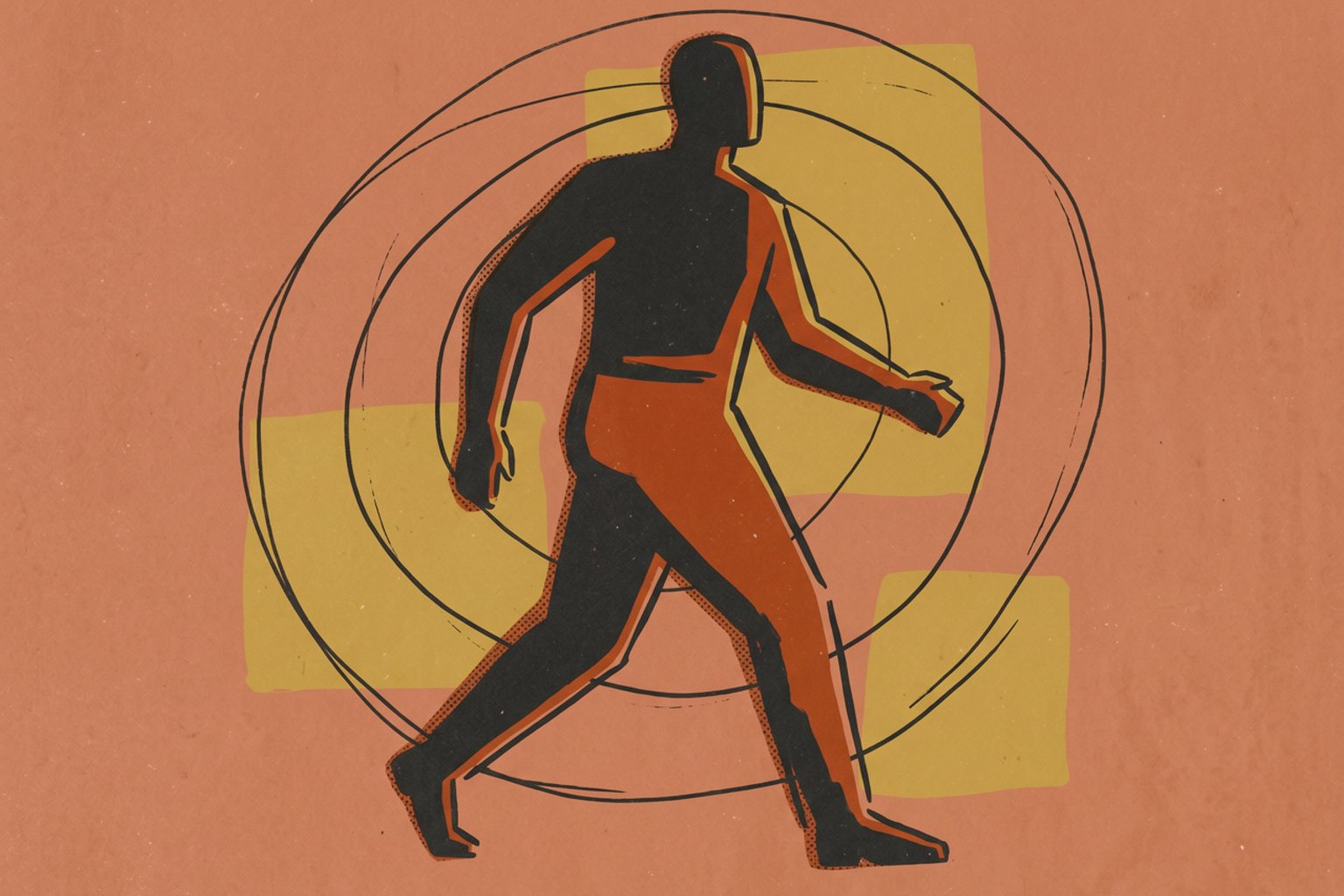
A study published in Nature Communications this month found that across five separate experiments involving 573 participants, roughly 75 to 80 percent of people veered counterclockwise within seconds of starting to walk. The pattern held in Spain and in Japan, two countries with opposite traffic conventions. It held whether people were alone or in groups. It held regardless of handedness, age, or which eye was dominant. Even children too young to have absorbed cultural norms showed the same bias. As physicist Iñaki Echeverría-Huarte, the study’s first author, explained, the counterclockwise drift emerged almost immediately for the large majority of participants.
What’s notable is that nobody can fully explain why. Project Associate Professor Claudio Feliciani, who worked on the study at the University of Tokyo, said the team tested the pattern against cultural background, group size, gender, handedness, and age, and the only factor that stood out was that children showed a stronger leftward bias than adults. The leading theory points toward something below conscious choice: an asymmetry at the biomechanical level, something built into how the body moves rather than something we learn.
Long before physicists measured it in a lab, retail designers were exploiting it. Consumer behavior researcher Paco Underhill spent thousands of hours on video documenting how shoppers move once they walk through a door, and he found the same thing the new study found: people turn right on entry and then travel counterclockwise through the space. He called it the invariant right. This is why grocery stores put produce and high-margin displays just past the entrance on the right, why checkout lanes tend to sit near where you started, and why the layout feels intuitive even though almost nobody designed their own shopping route on purpose. In the loop or racetrack layout that many retailers use, the tendency to turn right and follow a path means the biggest, most eye-catching display works best immediately to the right of the entrance, while the register sits to the left, near the natural end of the path.
IKEA takes this further than any other retailer, and it’s worth pulling apart why. The counterclockwise bias gives them a path people are already inclined to walk. What IKEA builds on top of that is one of the most deliberate user experience designs in retail. The company calls it the long, natural way, a one-way layout where signage directs shoppers from one department to the next, taking them counterclockwise through the displays and eventually into the warehouse. Nothing about the sequence is accidental. The forced flow format means every area of the store experiences uniform foot traffic, and merchandise that isn’t seen isn’t bought. Living rooms lead to bedrooms lead to kitchens lead to the marketplace of small goods near the warehouse, each one a touchpoint built to land in a specific order, with the cafeteria placed exactly where energy and patience start to run low. When IKEA experimented with a choose-your-own-path format at some smaller city stores, customer research told them shoppers actually wanted to be guided through the full sequence rather than left to navigate on their own, and the retailer brought the guided format back. That’s a rare thing in retail: customers explicitly asking to be led.
The pattern shows up well beyond retail too. Racetracks and many running tracks run counterclockwise. Researchers have found the same pattern in mosh pits at heavy metal concerts. A 2013 Cornell physics study of circle pits found that 95 percent rotated counterclockwise, a pattern that held across concert footage from the U.S., U.K., and Australia. Feliciani himself noted the parallel to sports, pointing out that some running and driving competitions are run counterclockwise for reasons that have never been fully explained. This isn’t just a fun fact. Places like airports, museums, train stations, shopping centers, and stadium forecourts are all shaped by these subtle movement preferences, especially once crowds form, and evacuation routes in particular could be designed more effectively by accounting for them. A bias this consistent, replicated across cultures, ages, and settings, isn’t a design trick—it’s a constraint the design has to work with.
Enjoyed this? Subscribe to our newsletter: https://mailchi.mp/d7ad724e9ead/jduuzlfk6n?utm_source=ig&utm_medium=social&utm_content=link_in_bio