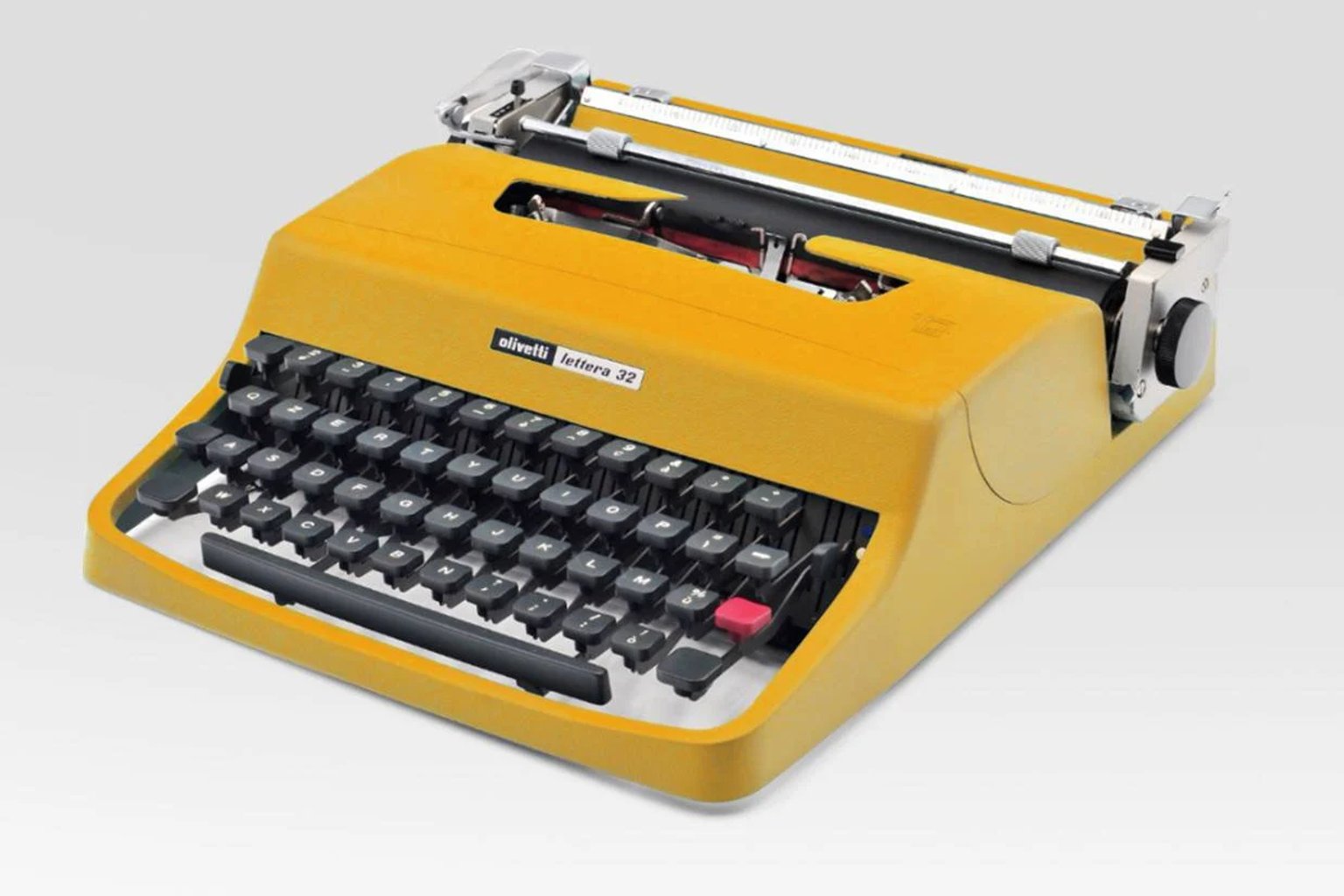
The Olivetti Lettera 32 typewriter was designed by Marcello Nizzoli in 1963 and is still being bought, used, and obsessed over by writers, designers, and collectors sixty years later. In an age when most consumer electronics are obsolete within five years, this eight-pound portable machine continues to command attention, devotion, and surprisingly high resale prices on vintage markets worldwide.
Cormac McCarthy typed The Road on his Lettera 32. So did Leonard Cohen, Sylvia Plath, Don DeLillo, and Günter Grass. These were not sentimental choices or affectations. The machine did exactly one thing with zero compromise: it put ink on paper. The keys required genuine pressure. There was no delete function, no undo, no autocorrect whispering suggestions into the subconscious. What you typed stayed. That constraint made you choose words more carefully. The tactile feedback loop was immediate and unforgiving, and the rhythm of the keys became part of the writing process itself.
Nizzoli, an Italian industrial designer who also shaped Olivetti’s iconic calculators and office machines, understood that a typewriter is not a neutral tool. Its form shapes how you think and work. The Lettera 32 is compact enough to carry in a suitcase, heavy enough to feel serious when you set it on a table, and beautiful in a way that makes you want to sit down and use it. The body curves are restrained and confident. The two-tone colorways in seafoam and gray or red and cream feel like mid-century European optimism without any of the kitsch that dated its contemporaries. Every detail serves the central purpose: write, and write clearly.
The Lettera 32 became the best-selling portable typewriter in history not because of marketing or planned obsolescence, but because it worked and kept working. Olivetti produced it until the 1980s with almost no design changes. It won the Compasso d’Oro in 1954, one of the most prestigious design awards in the world. Museums including the Museum of Modern Art in New York have it in their permanent collections. It is studied in design schools as an example of form meeting function with surgical precision.
Sixty years later, digital tools promise speed, convenience, cloud sync, and infinite possibility. What they often deliver instead is distraction, drift, and a creeping sense that the tool is using you as much as you are using it. The Lettera 32 still works because it was designed around a single clear purpose and every decision served that purpose. No feature creep. No software updates. No subscription model. Just a tool that knows exactly what it is and does that thing until the ribbon runs out.
Maybe the real question is not what it means when a 60-year-old tool outperforms everything that came after it, but what we lost when we stopped designing things to last.