
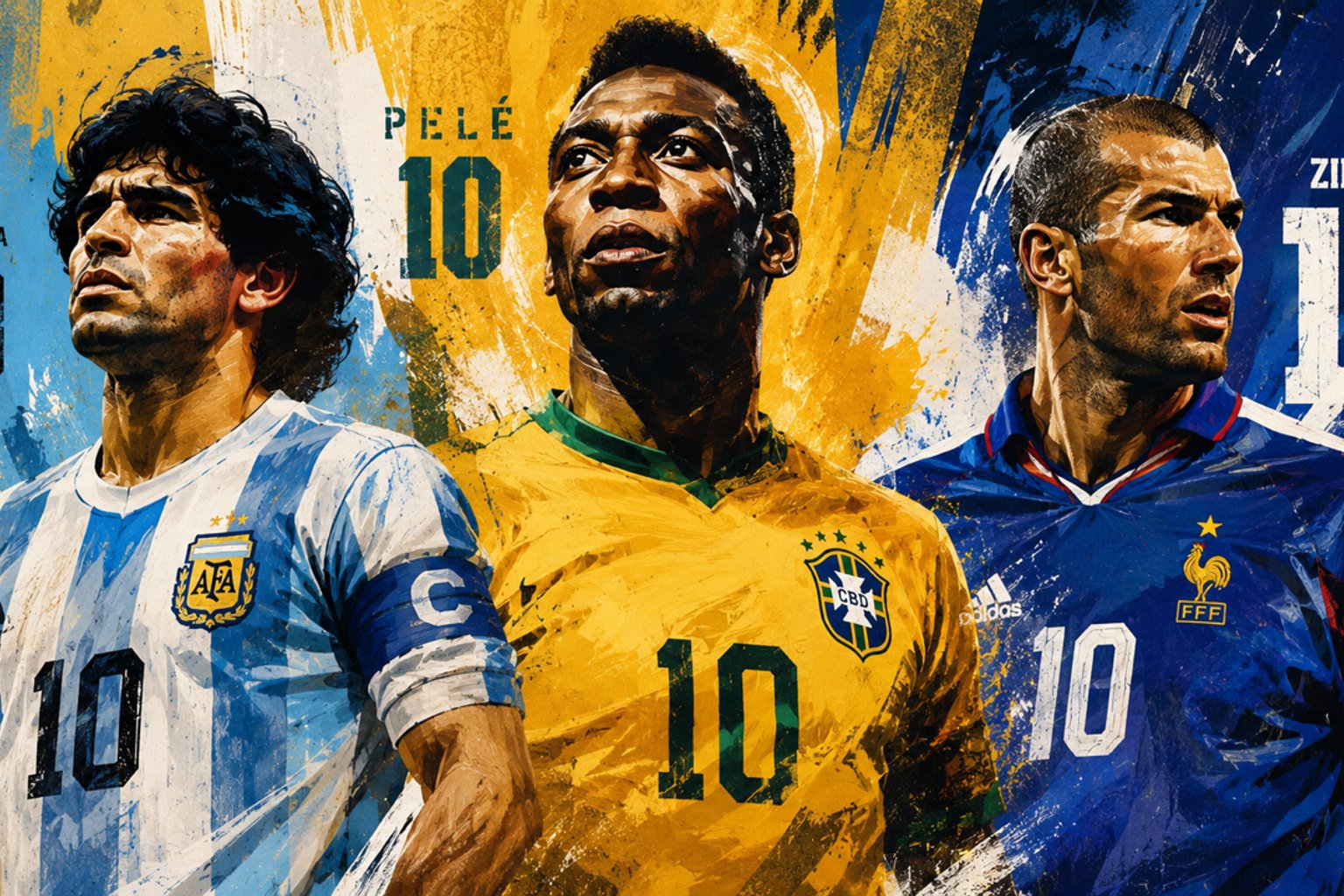
In soccer, the No. 10 shirt is the most iconic jersey in the sport. Not because of any formal decree, but because of a slow accumulation of genius, repeated over decades, that turned a number into shorthand for brilliance.
Historically, when players were first numbered in the early 20th century, the numbers 1–11 corresponded to positions on the field. The player wearing No. 10 was typically the attacking midfielder or inside forward — the team’s creative playmaker, responsible for creating chances and linking the midfield to the attack. This was the player with the clearest view of the game, the one who could read space and time better than anyone else on the pitch.
Over time, that tactical role became associated with the team’s most gifted player. The No. 10 shirt came to symbolize vision and creativity, exceptional technical skill, leadership in attack, and the player who can change a game with a moment of brilliance. It was not just a position anymore. It was a promise. Pelé wore it. So did Diego Maradona, Zinedine Zidane, Ronaldinho, Lionel Messi, and Neymar. Each of them added weight to the number, until it became a kind of visual shorthand for transcendence.
That legacy is so strong that many national teams deliberately give the No. 10 shirt to their biggest star, even though modern soccer no longer requires players to wear numbers based on their positions. Squad numbers are largely a matter of choice now, but No. 10 remains soccer’s most prestigious shirt, much like No. 23 in basketball became associated with Michael Jordan. It is a number that carries expectation, history, and mythology all at once.
Not every superstar wears No. 10. Cristiano Ronaldo is famously No. 7. Kylian Mbappé has often worn No. 10 for France but No. 9 at club level. Johan Cruyff made No. 14 legendary. But when you see a player wearing No. 10 at the World Cup, you are often looking at one of that team’s most creative and influential players. You are looking at someone who has been handed the weight of history and told to make something of it.
What is interesting here is not just the number itself, but the way meaning accumulates over time in visual culture. A number on a shirt becomes a symbol. A symbol becomes a narrative. And a narrative becomes something people believe in without ever being told to.
Enjoyed this? Subscribe to our newsletter.