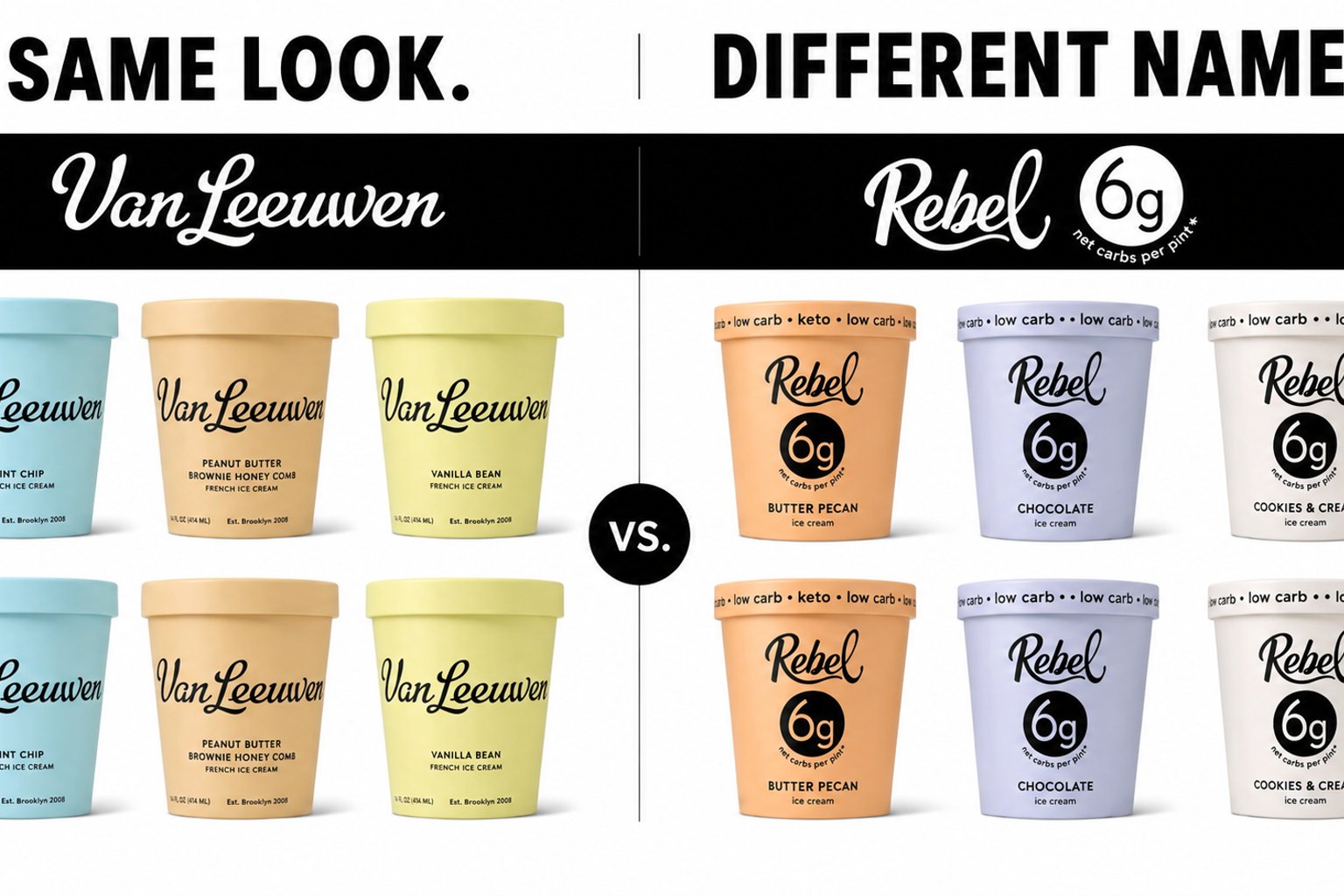
Last week, a federal judge in New York ordered Rebel Creamery to turn over nearly $23.8 million in profits and redesign its packaging after finding that it infringed on Van Leeuwen’s trade dress. The decision wasn’t about whether pastel colors belong to one company or whether script typography can be owned outright. The ruling was about something more fundamental: the power of a distinctive visual system and what happens when another brand gets too close.
Trade dress protection exists to prevent consumer confusion, but it also rewards the discipline it takes to build a recognizable identity. The court didn’t say Van Leeuwen owns any single design element. It said the overall look and feel, the specific combination of colors, typography, layout, and tone, had become so closely associated with Van Leeuwen that Rebel Creamery’s packaging was likely to confuse consumers. That’s a critical distinction. Design elements aren’t protectable in isolation. But when they’re combined in a way that becomes uniquely recognizable, they create brand equity worth defending.
This is the tension we navigate constantly as designers. Clients often arrive with references. They want the confidence that comes from borrowing cues from brands they admire. It’s a natural instinct, especially in crowded categories where visual conventions have already been established. But that instinct can also be a trap. The line between taking inspiration and creating something uncomfortably familiar is thinner than most people think. Following a trend might help you fit into a category today, but it won’t help people remember you tomorrow. Building distinctive brand assets, things that are unmistakably yours, is what creates long-term value.
The real lesson from this case isn’t about packaging. It’s about resisting the temptation to look like what’s already working and having the discipline to build something people will eventually recognize without explanation. That’s what makes a brand valuable. That’s what builds equity. And over time, that’s what becomes worth protecting. Strong branding isn’t about assembling the right ingredients. It’s about creating a combination that no one else could have made.
Enjoyed this? Subscribe to our newsletter.