Project Overview
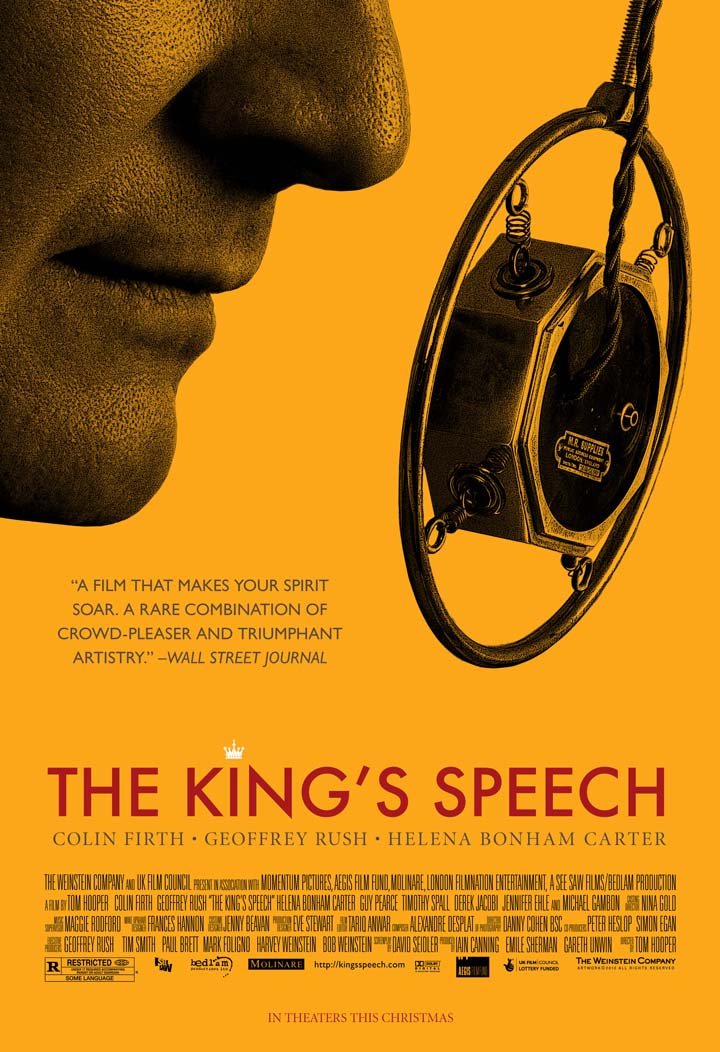
PlanetFab created the key art and theatrical poster for The King’s Speech. When we were commissioned, approximately 400 poster explorations by other agencies had already failed, and the original cast-driven poster was being sharply criticized.
Even with its remarkable cast, prestige, and a powerful true story, what it lacked was the single idea that could unlock the campaign and express the emotional conflict at its center.
PlanetFab found it in the one element the brief had instructed everyone to avoid.
The Challenge
The King’s Speech is a historical drama with an unusually intimate emotional premise.
King George VI was expected to speak for a nation at a defining moment in history. But he lived with a stammer that made public speech a source of fear, shame, and exposure. The campaign needed to communicate that conflict immediately.
By then, every exploration had already been done by other agencies. Royal portraiture, prestige cast imagery, what you’d expect for a period drama.
What else could we possibly do?
And to top it off, we were given one clear directive: Do not use a microphone.
The Concept
The Microphone
So, we went back to the story and found that at the center of The King’s Speech was not a king, a palace, or even a historical event. It was a man confronting the act of speaking.
The microphone was the physical embodiment of that conflict. It represented the King’s stammer, the scrutiny of an audience, the burden of public expectation, and the terrifying distance between having something to say and being able to say it.
The microphone was not a prop. It was the antagonist.
Once that was clear, so was the direction. It was immediate and emotionally specific.
The Key Art
After a round of about 10 explorations, the visual solution became obvious.
Rather than making Colin Firth the star of the composition, we made the microphone the star: a close-up of the King’s mouth facing the one uncredited character he had to confront again and again — the microphone.
We cropped tightly enough that the space between mouth and microphone became the story itself. The image distilled the film into two elements: the man who had to speak and the object he had to overcome.
Everything unnecessary was removed.
A simple color palette and typographic treatment let the image carry the campaign, and the one thing we had been explicitly told not to do became the campaign’s defining visual.
The Outcome
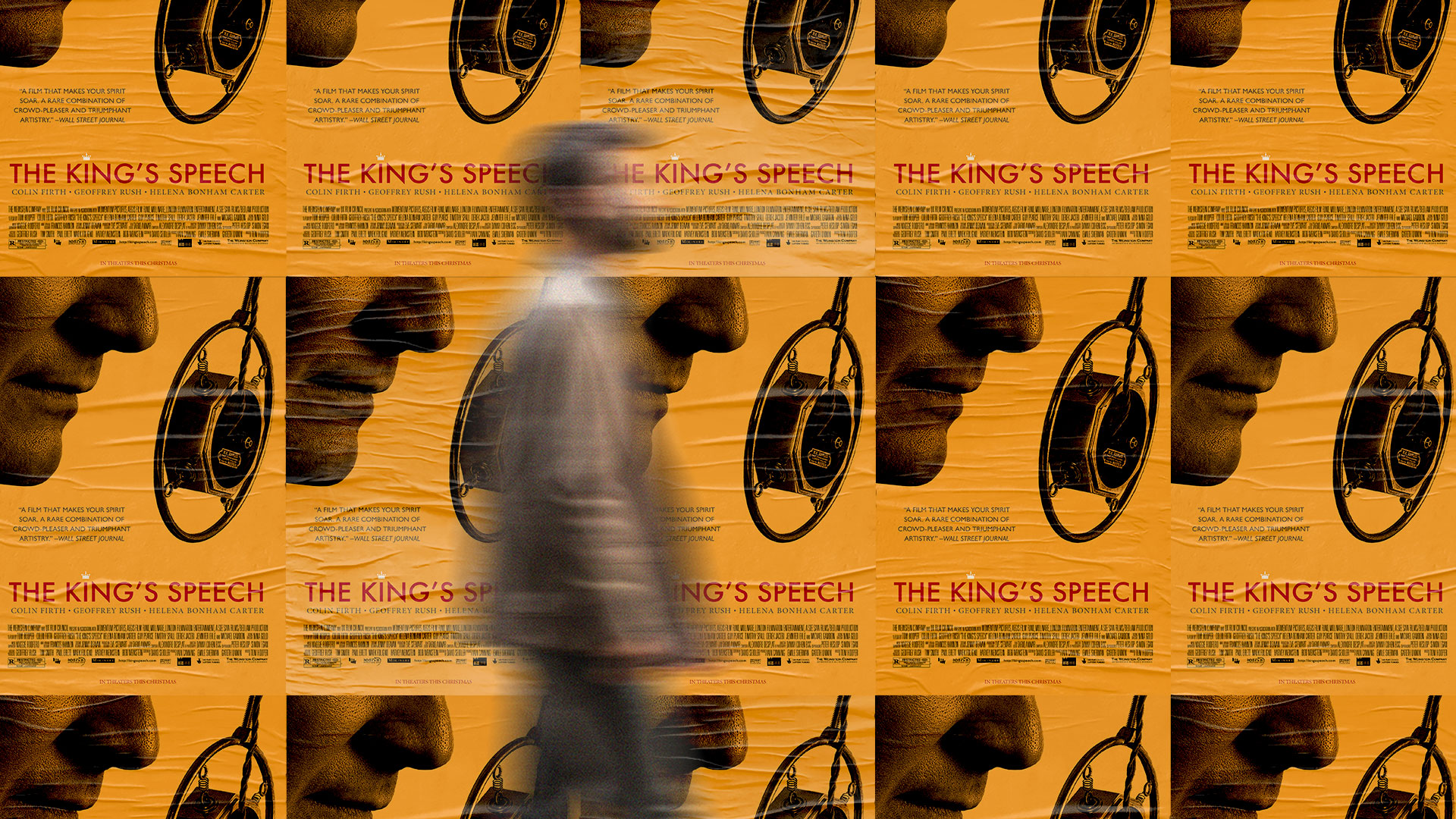
PlanetFab’s mouth-and-microphone concept became the key visual for The King’s Speech and the launching point for the film’s global campaign.
The Hollywood Reporter contrasted PlanetFab’s new artwork with the film’s earlier cast-driven poster, calling it the “sharp new poster” and describing the image as the King facing his “microphone nemesis.” The Hollywood Reporter: “The King’s Speech” Poster and Queen Bonham Carter’s Oscar Problem
The film went on to gross approximately $414 million worldwide from a reported $15 million production budget. The King’s Speech box office — Box Office Mojo
It received 12 Academy Award nominations and won four, including Best Picture, Best Director, Best Actor, and Best Original Screenplay. The King’s Speech — 83rd Academy Awards
After hundreds of previous explorations by other agencies, we identified the emotional truth at the center of the film, challenged one of the brief’s central restrictions, and turned the thing the King feared most into the image through which audiences encountered the story.
Directed by Tom Hooper and written by David Seidler, The King’s Speech stars Colin Firth, Geoffrey Rush, and Helena Bonham Carter.
See more entertainment work.