
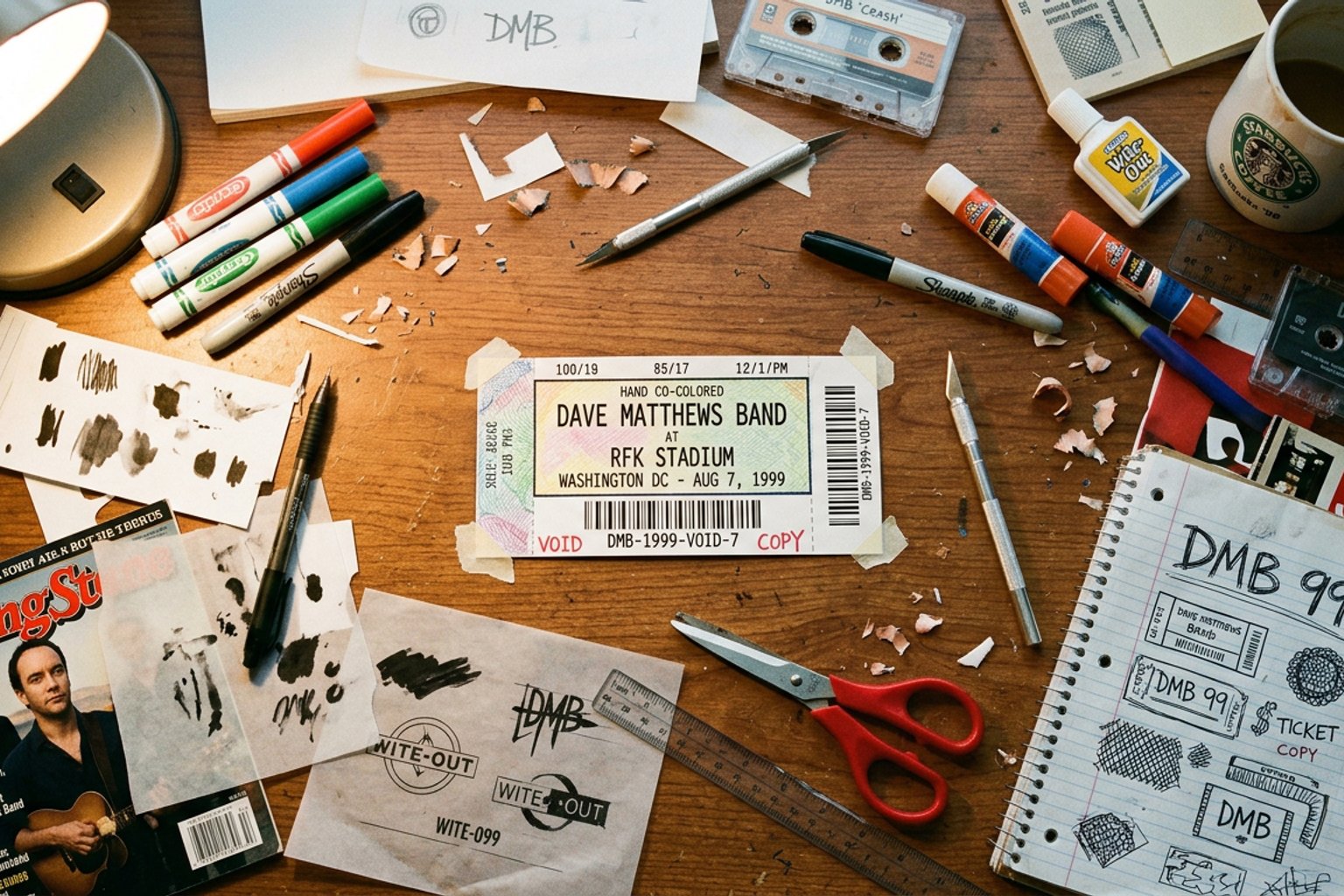
I spent hours as a teenager forging concert tickets. The careful matching of typeface and paper stock, the hunt for the exact shade of security tint, the painstaking recreation of barcodes that would never scan correctly anyway. It was analog, tedious, and mostly unsuccessful. The barrier to entry was high enough that most people gave up before they got close.
Security researcher Ian Carroll just did the same thing with Claude Opus 4.7 in about the time it takes to refresh a browser tab. He found a vulnerability in Front Gate Tickets — the company that handles ticketing for Lollapalooza, Bonnaroo, South by Southwest, Austin City Limits, and nearly every other major US music festival — and gained the ability to issue himself any ticket he wanted. VIP backstage passes, $4,000 platinum packages, anything marked sold out. All of it available at the click of a button, with no payment, no verification, and no meaningful audit trail that would have caught the exploit before he disclosed it.
Carroll reported the flaw to Front Gate instead of using it. The company patched the vulnerability within 24 hours and issued a statement thanking him for responsible disclosure. But the mechanics of what happened are worth sitting with. Claude wrote a nested SQL query that bypassed the site’s web application firewall, then helped Carroll extract password reset codes from the backend and take over a super administrator account. There was no two-factor authentication protecting that account. There was no detection system that flagged the intrusion before Carroll himself reached out to the security team. Just a single compromised password standing between the public internet and millions of customer records, plus the ability to generate tickets at will for any event in the system.
Front Gate is not a scrappy startup held together with duct tape. It is a subsidiary of Live Nation Entertainment, the same company that owns Ticketmaster, and it holds a near-monopoly on festival ticketing in the United States. This is the infrastructure. And the infrastructure, it turns out, had not been meaningfully tested against the tools that are now widely available to anyone with an API key and a few hours to spare.
The shift here is not just technical. It is cultural. What used to require a scanner, a color printer, and a decent eye for kerning now requires a conversational AI and about twenty minutes. The barrier to entry collapsed, and so did the assumption that critical systems are being hardened against the methods that can break them. Carroll himself noted that this was the first time he had encountered a vulnerability he did not fully understand until after Claude had already written the exploit. The AI did not just assist — it led.
That changes the threat model in ways that are still being worked out. It also changes the responsibility model. If an AI can find a flaw this easily, the expectation that companies are auditing their own systems with comparable tools becomes non-negotiable. Front Gate’s response after the fact was professional and cooperative, but the fact that the vulnerability existed in the first place suggests that no one had looked for it with anything resembling the sophistication that is now table stakes.
The teenage version of me would have been thrilled to know that one day this would all be automated. The adult version of me wonders who else has already figured that out.
Enjoyed this? Subscribe to our newsletter.