
Picked up the gestalten edition of Less But Better by Dieter Rams, and the first thing you notice is the weight. It is 154 pages, bound in a heavy slipcase, printed on thick stock, and somehow feels like the opposite of everything Rams stood for — a luxurious object celebrating a man who spent his career removing weight from objects. The irony is not incidental. It is instructive.
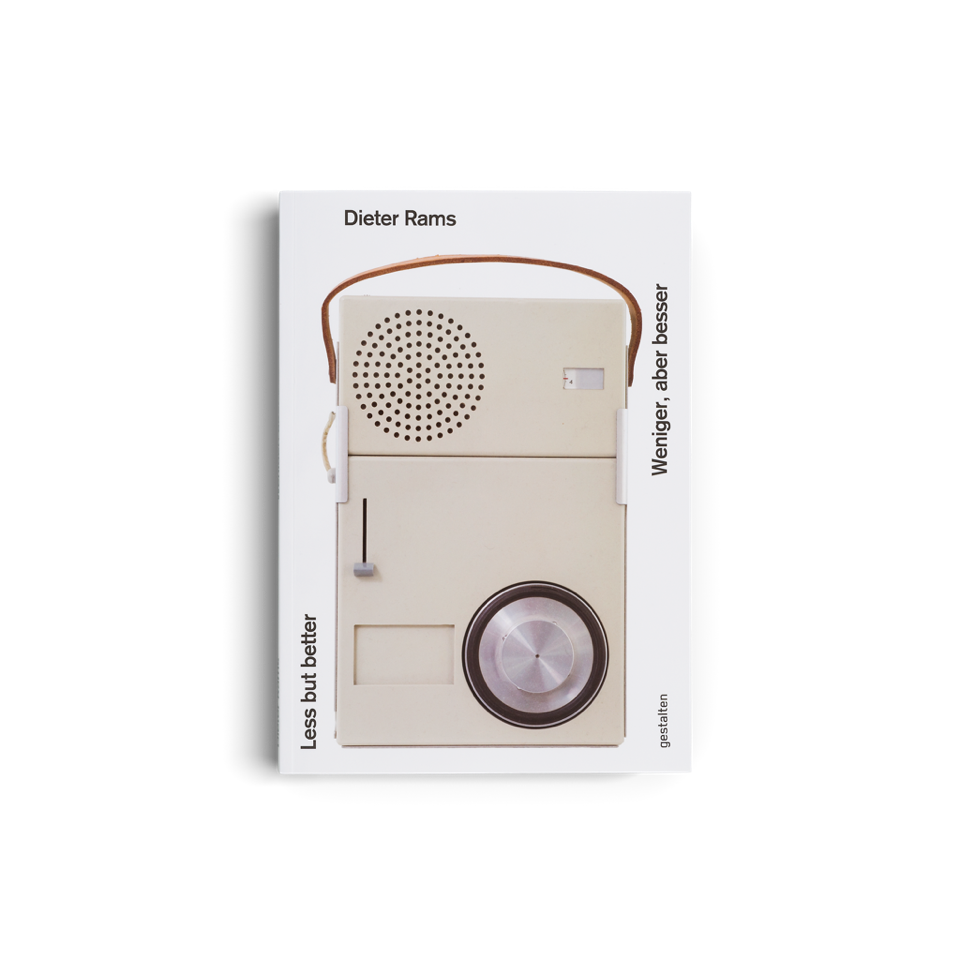
Dieter Rams, the German industrial designer who led Braun’s design team from 1961 to 1995, is best known for his ten principles of good design, a manifesto that has been quoted, cited, and misunderstood in equal measure. The tenth principle — good design is as little design as possible — is the one that gets the most airtime and the least comprehension. Most designers treat it as permission for minimalism, a style, an aesthetic move. White backgrounds. Sans serif type. Flat buttons. But Rams did not mean less as a look. He meant it as a discipline. Every element must earn its presence or be removed entirely. It is not about reduction for its own sake. It is about clarity, honesty, and respect for the person using the thing you made.
The book itself is thick, luxurious, reverential — everything Rams would have removed from a radio or a shelf. But that is what makes it worth holding. It reminds us that Rams designed objects for use, not museums. His work for Braun, from the SK 4 record player to the ET 66 calculator, was never precious. It was functional, accessible, and built to last. The contradiction between the book’s material presence and Rams’s design ethos is the point. We live in a culture that worships minimalism as an aesthetic but rarely practices it as a principle. We collect books about simplicity. We photograph empty desks. We buy expensive objects that signal restraint. Rams would have asked: does this need to exist?
What gestalten has done with this edition is create a document that honors Rams not by imitating his work, but by showing it in full context. The book includes essays, photographs, and a survey of his most iconic designs, each presented with the kind of editorial rigor that Rams himself would recognize. It is not a manual. It is a mirror. It asks the reader to look at their own work and ask the harder question: what are you keeping that you should remove? The book is beautiful and contradictory, which makes it human. A perfect reminder that Rams designed objects for use, not reverence.